Monday, 28 December 2015

Quadrophenia (1979), Scum (1979), The Long Good Friday (1980) & Babylon (1981)
 
Quadrophenia
In a short three year period between 1979 and 1981, British cinema underwent a brief  - and rather grubbily brilliant - renaissance. Four tough, uncompromising films about British working class life appeared and made cinema audiences realise that there could once again be films that they related to. Scum, with its horrible depiction of life in borstal, attracted a laddish element.
The Long Good Friday
The Long Good Friday brought in both the lads and their dads. And Quadrophenia got the youth vote, with its recognition of the tribalism that so blighted Britain in that period. The 'Mods vs Rockers' violence of the film being recognised by punks  - who'd faced violence by bikers and skinheads - or by any kids who'd been chased through the streets just for looking different. Babylon is perhaps the outsider, never getting a wide release or achieving the same level of fame, but every bit as interesting and relevant as the others.
 
Forget Colin Welland's proclamation that 'The British Are Coming' when he accepted his Oscar for Chariots of Fire (1981), because if he'd been keeping his eyes open he should have seen that the British were already there and could make films that ordinary audiences could relate to. And they could certainly compete with what America had to offer. Anyone who watched Bad Boys(1983), a Sean Penn film that was touted as America's answer to Scum will tell you that.
 
N.B. I must admit to a bias here. In 1980 I was working in a cinema and saw how audiences reacted to Quadrophenia, Scum and The Long Good Friday: they loved everything about them and  came back in good numbers as the three were re-released in double-bills that paired them in a number of combinations. And, whatever anyone tells you about the popularity of Chariots of Fire, I can recall how empty the cinema was when it was first released. It came and went without a flicker of interest. Then it won an Oscar and was re-released. Only then did crowds flock to see it. And half of them actually came to see Gregory's Girl which was on a double-bill with it. By the end of the run, more people were coming to see Gregory's Girl than Chariots of Fire. In fact, as I recall, plenty of people would come for the 'supporting feature' then head off home as soon as people started running up beaches in slow motion.

Babylon
Anyway, enough about something I don't like, let's get back to what we are actually discussing: grubby British films. I think of these four films as being connected, not just by their nationality and by their timing, but by their themes and their casts. Although Babylon is perhaps a less obvious choice to be included with the others, it shares the same worn out London setting of railway arches, council estates, run down Victorian streets as The Long Good Friday (especially those scenes in the latter film where the gangsters visit Brixton) and Quadrophenia.
Babylon
It's a world familiar to those who lived through the era, or even those whose memories are actually shaped by TV series like The Sweeney.


Similarly, the central characters in both Babylon and Quadrophenia are both music-loving young Londoners, at odds with both their parents and their employers and, increasingly, at odds with their peers. They are outsiders looking for a way out. The theme of youthful rebelliousness being confronted by established criminals/'businessmen' is seen in Babylon - where the characters meet a 'record importer' to  buy the latest Jamaican imports - and in Quadrophenia - where the mods buy pills from local gangsters.

Scum
The theme of youth and its collision with authority is further examined with Scum, set in the violent world of a borstal. The inmates are recognisable as the same type of youths in both Babylon and Quadrophenia - those who have stepped over the edge of youthful stupidity into crime and a world far more violent than their lives prior to captivity. And Scum acts as a bridge to the established world of serious crime seen in The Long Good Friday. It's easy to see many of the characters easily stepping into serious crime upon release. In a pivotal scene in The Long Good Friday, that helps bind the films together, we see Harold Shand (Bob Hoskins) visit Brixton. The local kids who offer to protect his car are referred to as 'little acorns' i.e. urchins who might be destined to grow into the type of serious criminals they have become after starting by operating the same scams. That Brixton locale links us to the world Babylon and to the progression, through petty crime, to Scum's borstal, then onto the world of real villains.

And it's not only the themes and locations that are shared by these films. They also share a core of actors who appear across them, binding them together in a similar way  to how certain film companies used familiar faces throughout their output (Gainsborough, Ealing and Hammer being good examples).

So here are some of the actors who had roles in more than one of these films:

Phil Daniels starred in both Scum ...

Ray Burdis, John Blundell, Phil Daniels & Julian Firth
and Quadrophenia:


John Blundell, who as 'Banks' was the 'Daddy' followed around by Phil Daniels in Scum ...

John Blundell (right)
... but was his opponent, one the leading rockers, in Quadrophenia:

John Blundell (centre)
Also with two appearances is Perry Benson, who is an inmate in Scum ...

... and has an uncredited role as a youthful employee of the advertising agency in Quadrophenia:
Perry Benson (centre)


Julian Firth was a 'pilled-up' young mod in Quadrophenia ...

... and a vulnerable young inmate in Scum:


Alan Igbon clocks up two appearances, as a mugger in Babylon ...
Alan Igbon (right)
... and an inmate in Scum:
Alan Igbon (centre) with Andrew Paul (left)


Some of the cast members make three appearances: Trevor Laird was in Quadrophenia as 'Ferdy' ...


Trevor Laird (left) with Phil Davis (centre) and Gary Shail (right)
... was a youth mending a car in The Long Good Friday ..


... and in Babylon as 'Beefy':

Trevor Laird (right)

P.H. Moriarty also makes three appearances, as 'Razors' in The Long Good Friday ...

P.H. Moriarty (right) with Bob Hoskins
... as a barman in Quadrophenia ...
PH Moriarty (right) with Phil Daniels
... and as a prison warder in Scum:


 Whilst we are on the subject of casting, it appears that if  the casting directors at the BBC are looking for someone of a certain age group to appear in Eastenders, they look no further than these films:

Karl Howman appeared in both Babylon ...

... and The Long Good Friday ...


... and currently appears as 'Buster' in Eastenders.

Another current Eastenders regular is Gillian Tayleforth, who also appeared in The Long Good Friday:

Quadrophenia saw a number of future Eastenders. Most notably Phil Daniels (in 208 episodes as Kevin Wicks). His Quadrophenia co-star Mark Wingett also appeared in Eastenders (in 27 episodes as Mike):
Mark Wingett (left) and Phil Daniels (right)
Also with Daniels in Quadrophenia was John Altman, who went on to star in 237 episodes of Eastenders as Nick Cotton:
John Altman (left) with Phil Daniels (right)
Both of Daniels's parents in Quadrophenia, Kate Williams and Michael Elphick ...
... also went on to appear in Eastenders. She played 'Liz' in 69 episodes whilst he played 'Harry' in 29 episodes.

Jeremy Child, who was one of the managers at the advertising agency in Quadrophenia ...
Jeremy Child (right) with Benjamin Whitrow (left)
... appeared in six episodes of Eastenders as a vicar.

Although only in 2 episodes as 'John Hewland', Jesse Birdsall is another from the Eastenders cast who also appeared in Quadrophenia, briefly appearing as a rocker who beats up one of the mods:
Jesse Birdsall (left) & Gary Holton
Although I couldn't spot her onscreen, future Eastenders star Carol Harrison (who played 'Louise' in 94 episodes), was an extra in Quadrophenia as a 'biker girl'. Another uncredited extra, Harry Fielder, appeared in the very first episode of Eastenders as a stall holder. And Michael Dickins, one of the mods, appeared in a single episode as a homeless man.

Of course, we mustn't forget that Phil Daniels also appeared in Scum ...
Phil Daniels (right)
... as did Andrew Paul ...
Andrew Paul (left)
... who appeared as 'Maxwell' in three episodes of Eastenders in 2003.

And one of these two detectives in Babylon is Harry Miller, making his first onscreen appearance ...

... whose next role was - yes, you've guessed it - as a detective in the second ever episode of Eastenders.

Now, please don't ask me to also list how many of the actors from these four films also appeared in The Bill - there are just too many!

Moving forward, the influence of these films is clearly seen in the work of Guy Ritchie, and it's not just the themes of young Londoners on the edge of criminality. Lock, Stock & Two Smoking Barrels features Sting ...

... who was also in Quadrophenia:


Then there's P.H. Moriarty, who appeared in three of the four films, appearing as 'Hatchet Harry':


Dexter Fletcher...

... had made a youthful appearance in The Long Good Friday:

 Danny John-Jules ...

... had also been an extra in Scum:

Danny John-Jules (front left)

 And Alan Ford ...
Alan Ford (right) with Nick Moran
... who was also in Ritchie's film Snatch ...

... had been one of the gangsters in The Long Good Friday:


It's a small world.


Sunday, 4 October 2015

The Passionate Stranger (1957)
 
Oh dear, this film is rather dull. It's a 1950s 'melodrama within a farce' that is neither particularly dramatic nor particularly farcial. In fact, I spent most of the film waiting for it to end. Unforunately, I didn't manage to fall asleep. Is there anything interesting I can say about it?
 
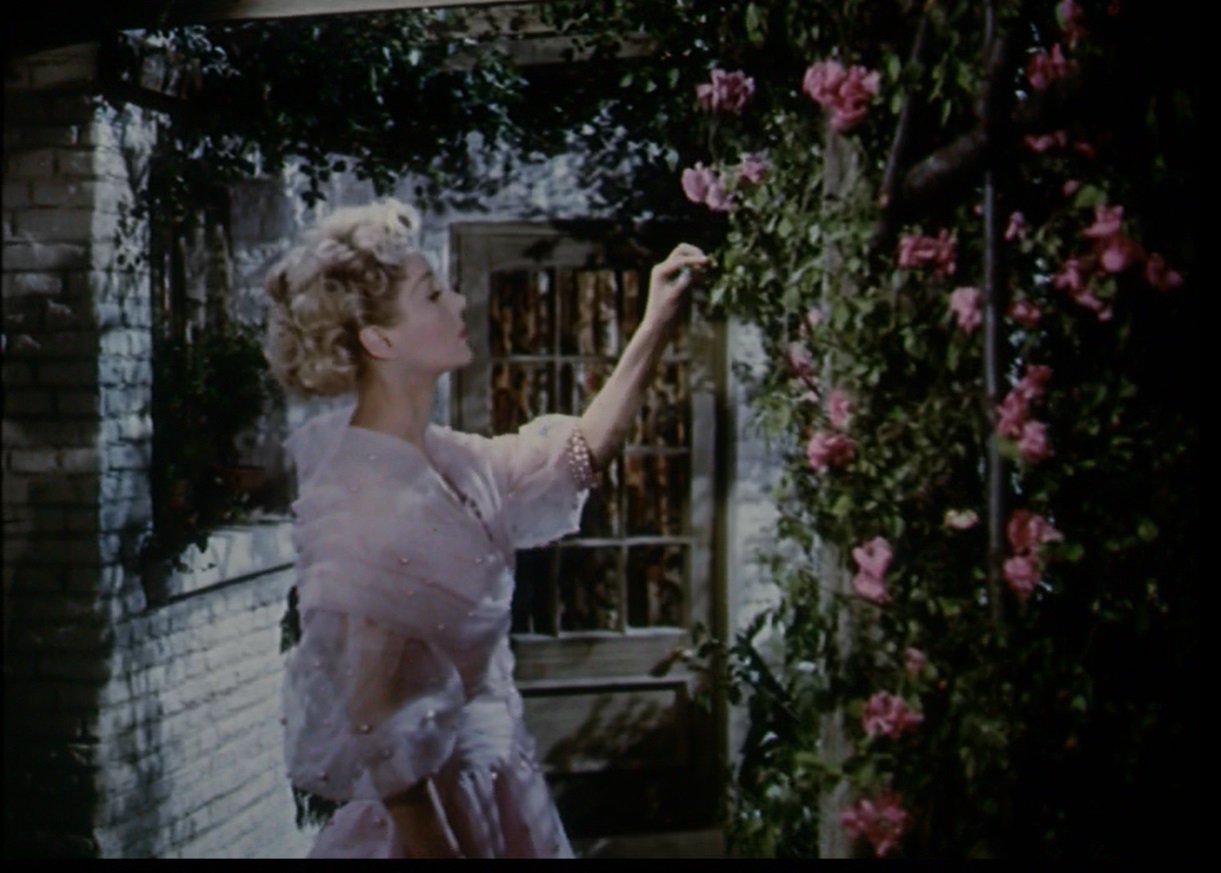
The producers employed noted fashion designer Norman Hartnell to design the dresses for Margaret Leighton. They got their money's worth: she wears a total of 21 outfits. And here they are:


Monday, 3 August 2015

Victim (1961)
 
Dirk Bogarde

From the team of Basil Dearden and Michael Relph, the 1961 film ‘Victim’ is a ground breaking film about the precarious existence endured by the UK’s homosexual community, prior to legalisation in 1967. With such films as ’Violent Playground’ and ‘I Believe in You’, Dearden (director) and Relph (producer) are long associated with supporting the underdog. Working with screen writer Janet Green, who had previously penned the Dearden-directed ‘Sapphire’(1959), they produced a film that both reflected a changing society and aimed to drive forward those changes. This crusading image has meant that Dearden and Relph’s films have their detractors, with the films accused of being overly earnest and liberal tales that preached to their viewers in an effort to educate rather than to entertain. Despite such charges, ‘Victim’ is, above all else, a challenging film and is claimed as the first British film to use the word ‘homosexual’. As such, it’s a film that deserves to be seen and to be examined from the perspective of the social-historian.
It’s the story of a talented and successful barrister Melville Farr (Dirk Bogarde) who faces exposure and ruin when a former lover ‘Boy’ Barrett (Peter McEnery) ... 
Peter McEnery
...is blackmailed with a photograph showing them together. If Farr does not face enough troubles if he is exposed as a homosexual by any police action, he also faces having to reveal the truth to his wife Laura (Sylvia Syms). Hoping to avoid police action, Farr decides to investigate the case and reveal the blackmailer.
Dirk Bogarde & Sylvia Syms
Dirk Bogarde
It is not just the subject matter that is controversial (a sympathetic portrayal of a community that was widely vilified and faced both violence and legalised persecution at the time) but the casting choices were also a bold statement. The early sixties was a time when Dirk Bogarde appeared to have taken the decision to not only take on roles that pushed him far away from the heartthrob image of his early career, or the comic roles many associated him with, but also to move into a far darker territory. His sinister and manipulative role as ‘The Servant’ (1963) would be a revelation of Bogarde’s acting ability. In that film he was telling the world ‘I can act’! Yet two years earlier he had been sending out a more dangerous message. With skin tight black leather trousers and gloves worn as his cowboy costume in ‘The Singer Not the Song’ (also 1961), Bogarde hinted at a side of his sexuality that the film industry might have been uncomfortable with. Yet with ‘Victim’, Bogarde surely outed himself. Another actor who appears to be shedding his fear of exposure is Dennis Price as Calloway, a Noel Cowardesque actor ...
Dennis Price

Dennis Price
...who is another of the blackmailer’s victims. Price had famously struggled with his own homosexuality, becoming a heavy drinker and even attempting suicide as he balanced his sexuality with his public image that included a wife and two children. Here was another potential 'victim' of the law playing out a familiar role.
What is interesting is that there is very little said about the sex lives of these men. In an era when even to include the word ‘homosexual’ on-screen was considered controversial, the director was hardly going to be able to expose their sex lives. In many ways, by forcing the film to concentrate on the emotional side of their lives – in particular their longing for love and a ‘normal’ relationship – the film is actually more effective. By not showing any intimacy between the men – something that might have caused uproar – the subject of love, not sex, comes to the fore. Farr struggles with his love for other men, more than he struggles with his desire for them. The bookseller Mr Doe (another of the blackmailer’s victims) …
Norman Bird
… wants, above all else, for ‘Boy’ Barrett to share his home, to live as a normal couple. It gives the film a tenderness that would be lost amidst depictions of any sexual contact.
 As such, where the film is most effective is its portrayal of hidden lives. It’s a world of furtive glances across pub lounges; men drinking small glasses of port rather than pints of beer; of hairdressers with a history of convictions, unable to handle the ever present threat of exposure; men afraid of losing everything if their parents find out; lonely old men searching for true love that society has denied them; and men able to spot ‘one of their own’ from a distance.
John Bennett
Another important aspect of the film is its presentation of a world that is changing. Right from the opening credits the viewer is presented with London’s changing skyline: a new development reaching high above the surrounding landscape.

Peter McEnery
At one point, we see this development with the tower of Westminister Cathedral in the background. Maybe it’s just a coincidence, or maybe it’s a metaphor for a changing society in which the church is being challenged by a new morality. When we later see London’s skyline, it’s the traditional smoky landscape of chimneys in which St Paul’s Cathedral takes centre stage, representing the old world where religion suppresses modern sexuality.

The religious theme is returned to in a later conversation between two police officers …
John Cairney & John Barrie
… when the senior officer listens to his junior’s condemnation of homosexuals and reminds him that, at one time, men of his puritan religious beliefs were executed rather than tolerated.
The film is not without faults: the attitude of the policemen towards the homosexual community is hardly balanced. There is discussion of their being victims of the blackmailers: how their ‘crimes’ inspire others to commit crime by exploiting their vulnerability. Yet it fails to depict any of the violent hostility history shows us was faced by ‘queers’. This is a similar presentation of policing that Dearden and screenwriter Janet Green had used in ‘Sapphire’ (1959), a study of racial tensions in West London, where the senior policeman is sympathetic whilst his junior is hostile to Notting Hill’s growing West Indian population. A similar presentation was used in ‘Violent Playground’, where the policeman is sympathetic towards Liverpool’s poor and its population of juvenile delinquents. Or how the stuffy probation officer (Cecil Parker) in ‘I Believe in You’ grows to understand the youths he is given to support and rehabilitate. Maybe this was part of their message: that these figures of authority are individuals and that the main problem is society itself rather than any one element. Mind you, Dearden and Relph were also the director and producer of ‘The Blue Lamp’. Maybe they just liked coppers ….
Also look out for:
Alan Howard:

Alan MacNaughton:

Charles Lloyd Pack:
 
Derren Nesbitt:

David Evans & Hilton Nesbitt:
 
Donald Churchill:
 Frank Thornton:

John Boxer:


Mavis Villiers:

Nigel Stock:

Margaret Diamond:
 
Noel Howlett:
 
Anthony Nicholls (centre) & Peter Copley (right):
 
Anyone who reads this blog on a regular basis will not be surprised to know that 'Victim' is currently available from the good folks at Network DVD: