Saturday, 9 November 2013

I Believe In You (1952)
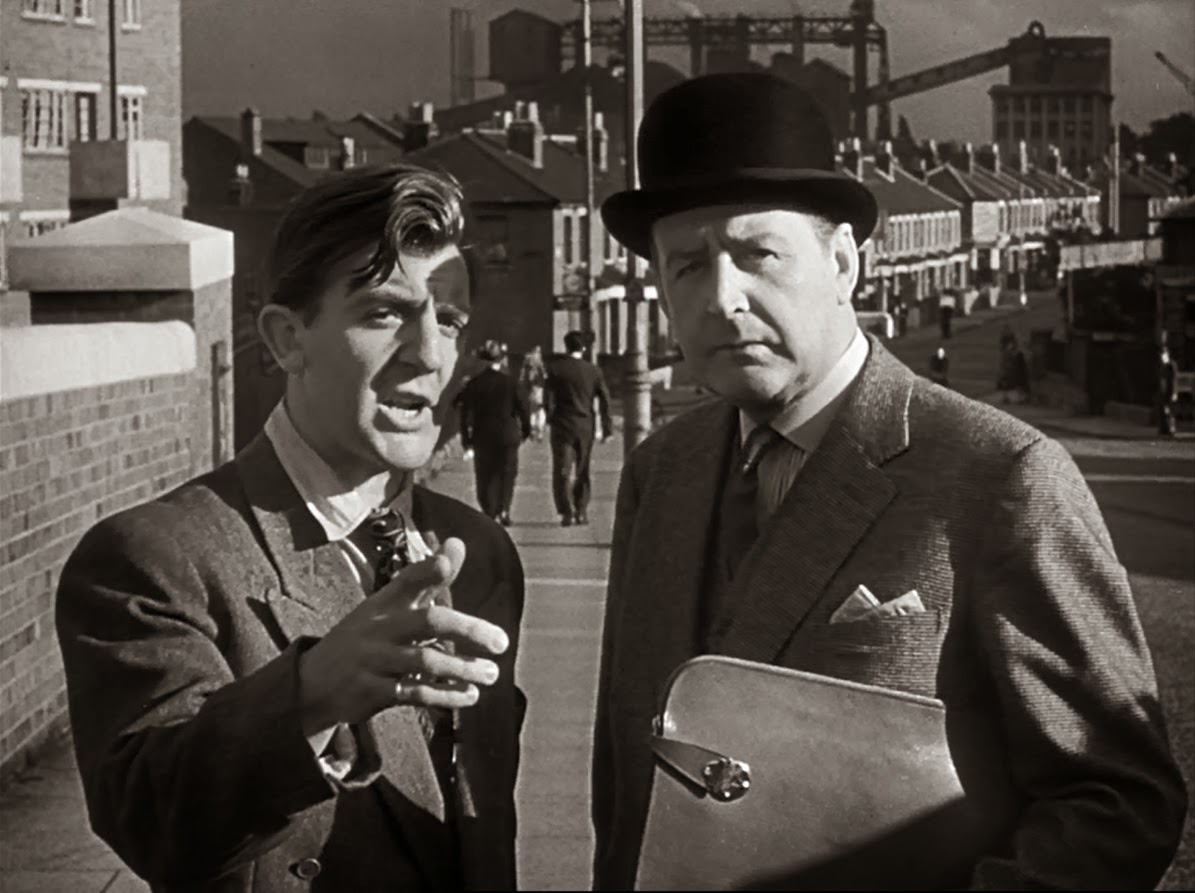
Stanley Escane (centre) and Harry Fowler (right)
This is one of too-often ignored films to come out of Ealing Studios in the post-war years. All too often when people think of Ealing they automatically think of the comedies, rather then the quite-often equally as impressive dramas. Based on a memoir entitled Court Circular by Sewell Stokes, I Believe in You is the story of probation officers in South London in the late 1940s and focuses on the period's popular theme of the rising menace of juvenile delinquency. Stokes had worked as a probation officer at Bow Street Magistrates Court in London during World War 2, giving him an intimate knowledge of the trials and tribulations of those attempting to guide troubled teenagers away from crime.
 
Cecil Parker stars as Henry Phipps, recently retired from the Colonial Office (since the Colonial Office was finding itself short of colonies) who is bored and decides to try his hand at working as a probation officer after he meets Norma Hart and her probation officer Matty Matheson (Joan Collins and Celia Johnson).

Joan Collins and Celia Johnson
 
Collins literally crashes into his life after her criminal boyfriend crashes a stolen car whilst being chased by the police. She clumsily attempts seduction, but merely arouses his curiosity in the world of juvenile delinquents.
Joan Collins & Cecil Parker

Joan Collins
And so he starts work, taking on the case of Charlie Hooker (Ealing regular, Harry Fowler), among others.
Harry Fowler
Hooker is initially antagonistic towards Phipps but the two soon grow to understand each other. As Johnson and Parker slowly grow friendly, so too do their charges Collins and Fowler.
 
Harry Fowler & Joan Collins

Harry Fowler & Joan Collins
The film doesn't preach too loudly, despite its obvious sympathy for the petty criminals who pass through the courts. The impact of war on their lives is shown: Hooker's father died in the war yet the subject isn't pursued or analysed. Instead, the subject of bereavement is shown in a balance manner: another of Matty's clients, the Honourable Ursula (played by Ursula Howells) turned to drink after he fiancée was killed, whilst Matty herself had lost her husband to war. The message is clear: everyone copes with these things in their own way, and some people need more help than others to cope.
 
Much of the film looks at contrasts within society: Parker's comfortable life is far different from that of his clients. He lives in a smart flat ...
Cecil Parker
 ... yet they live on rubbish strewn streets, in crumbling houses or small flats ...
 
Cecil Parker


Cecil Parker

... theirs is a world of bombsites and endless smoky railway yards:

 
As Mr Phipps narrates: "'I'd always thought of London in terms of Knightsbridge and St James." The contrast between these two world's is highlighted by Matty who accuses him of dressing so posh that he "frightens the horses." Acting on her advise, he abandons his tailored overcoat and bowler hat, replacing them with a far less conspicuous combination of raincoat and trilby:
Cecil Parker & Joan Collins
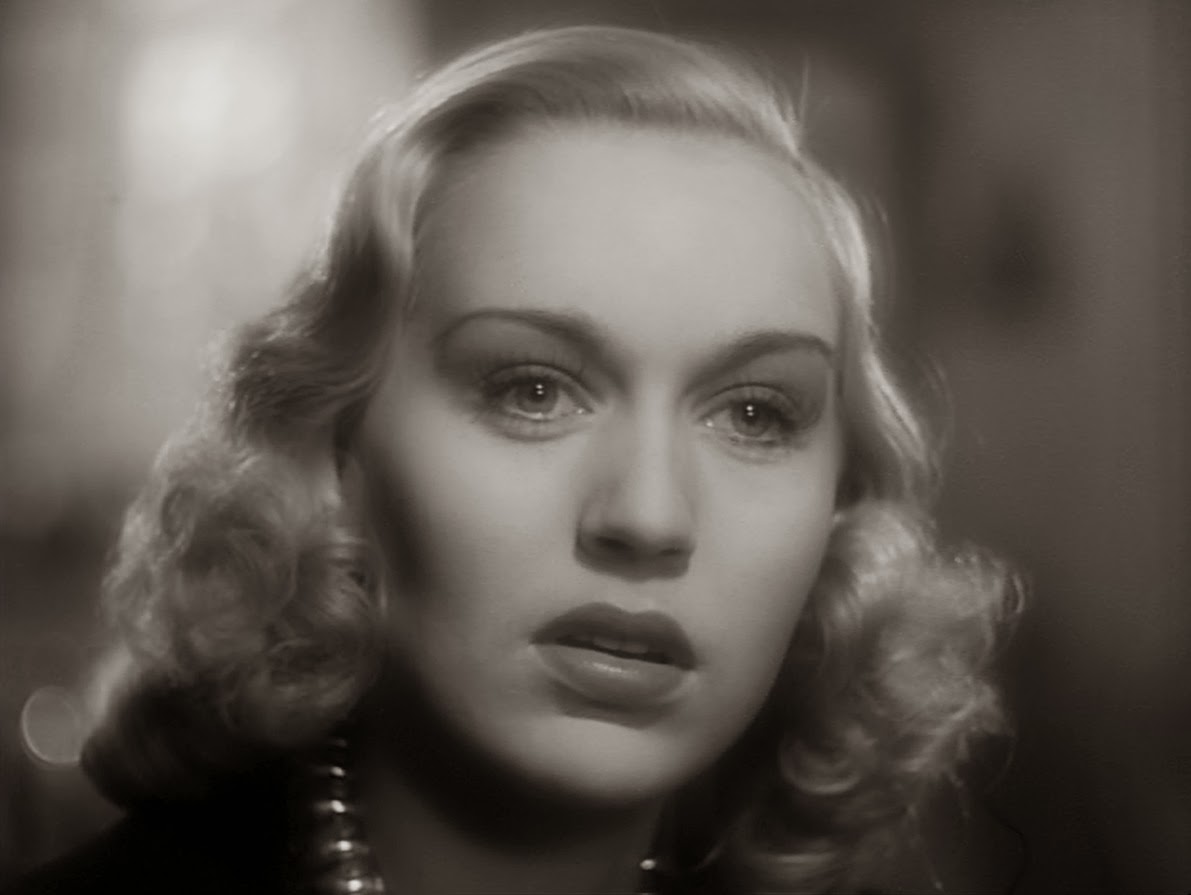
The film is a good introduction to Joan Collins, in only her third credited role. She conveys her character's sensitivities well: showing both her soft and her hard side.
Joan Collins
She is naïve in her clumsy attempts seduce Phipps and brash with growing relationship with Hooker. In a scene shot at the Endell Street Baths in Central London, Collins switches from girlish giggling to convincing sensuality in seconds. And she does it well:
Harry Fowler & Joan Collins


Harry Fowler & Joan Collins
So what else is there to point out:
 
Let's see who else appears:
George Relph (the father of the film's director Michael Relph) appears as Mr Dove, a kindly senior probation officer
Mandy Miller (who also starred in the film Mandy)
 
Stanley Escane, who had previous featured with Harry Fowler in Hue & Cry
An early appearance of Laurence Harvey, as Edna's criminal boyfriend, Jordie Bennett.
N.B. this image appeared on some posters for the film:
This poster is currently available from film poster dealer Greg Edwards


Ada Reeves appears as a former artist's model whose glory days are far behind her. Reeves was herself a former Music hall star whose glory days had passed.


One of the portraits that she shows to Mr Phipps, making him realise how this seemingly dotty old lady had an interesting story to tell.
 
Gladys Henson
Glyn Houston
 
Ursula Howells

Sid James


Katie Johnson as a dotty old lady who believes her neighbours are trying to poison her
A couple of things to note: The photograph of Matty's dead husband keeps changing:
Blue uniform


White Uniform
Also, a hole in Harry Fowler's jacket manages to disappear halfway through a scene:
Before (complete with hole on left breast)

After (with hole gone)
You might also like to see the drawing of Mr Phipps done by the judge during a hearing:


 And, just in case anyone is interested, here's the shoes Joan Collins wears:
 

Sunday, 3 November 2013


Even More from
 'The Arsenal Stadium Mystery':
 
Leslie Banks was notable among actors of his generation that how he was filmed had a significant relevance to the character he was depicting. As a soldier in the First World War, Banks had received serious facial wounds that left him scarred around his left eye. As such, when playing villains the camera would linger on the left of his face to emphasis his scars. However, as the eccentric Inspector Slade he wore thick rimmed glasses to conceal the scars, only leaving them visible in a handful of shots:
 
Leslie Banks with visible scars
Leslie Banks with glasses to conceal the scars
 
Whilst Banks was scarred from action in the First World War, one of his fellow actors in The Arsenal Stadium Mystery was soon to receive serious facial injuries in the Second World War:
 
Esmond Knight and Leslie Banks
 
Esmond Knight
As an officer in the Royal Navy Volunteer Reserve (RNVR), Knight was posted to HMS Prince of Wales, the Royal Navy's most modern battleship. In 1941, whilst in pursuit of the Bismarck, a shell hit the bridge of the Prince of Wales, killing many sailors.
 
Sixteen year old Albert Riddle was standing beside Esmond Knight on the ship's Air Defence Platform when the shell struck. His account was later included in the book Blitz Kids by historian Sean Longden:
 
The Prince of Wales had thrown itself into battle, opening fire on the Bismarck, yet now had become the target for both Bismarck and Prinz Eugen. The end of the sea battle came in an instant. With astounding accuracy, a 15-inch shell struck her bridge, exploding as it passed out the far side. On the Air Defence Platform, just above the bridge, young Albert Riddle was standing beside Lt Esmond Knight. The contrast between the two couldn’t have been greater: the sixteen-year old boy who had gone straight into the Royal Navy, and the 35 year old actor, a star of stage and screen who had volunteered for the Royal Navy at the outbreak of war. The noise and heat of the shell was something Riddle was never able to forget: “Esmond Knight was my officer, he was in charge of all the lookouts. He was standing just behind me. This shell went between us – just inches away - and blinded him.”  The shell exploded beneath them on the bridge.
Riddle went quickly down to the bridge to see if he could help. He was confronted by a scene of absolute carnage: “Captain Leach was a wonderful man. He was the only one left standing He and the gunnery officer were the only two who survived.” The youngster looked at the rest of the men on the bridge: “They were blown to bloody smithereens. It was a terrible shock. It’s not a thing I’ve ever talked about. These people were absolutely blown to bits.” They had not suffered the type of clean death so often portrayed in the films of the period: “The voice pipes, leading down to the engine room, were full of flesh and blood - bits of people’s bodies – there was blood all over the floor.” Despite the carnage, the captain remained calm: “I can still see Leach now, he said ‘Is there anybody who can stomach cleaning this up?’ He was looking for volunteers. I was quite happy with it. It didn’t sicken me. I just got cracking. Some people couldn’t do it. I was always fine with that sort of thing.” Looking back nearly seventy years later, Riddle was able to explain why, despite his youth, he had been able to help clear up the shattered corpses: “I think it was coming from a farm, I was more used to the idea of blood and mess. I used to help sheep give birth, or help the horse when she was foaling.” The shell had killed fourteen seamen, with two of the casualties just seventeen years old. (copyright - Blitz Kids - The Children's War Against Hitler by Sean Longden. Constable & Robinson, 2012)
 
The impact of the shell left Esmond Knight totally blind for two years, with some sight later returning to one eye. Despite his wounds he continued acting. In 1960 Knight was cast as Captain Leach, his own commanding officer on the Prince of Wales, and recreated the scene of his own wounding:
 
Esmond Knight as Captain Leach in Sink the Bismarck

HMS Prince of Wales struck by shells in Sink the Bismarck
 
 
Esmond Knight as Captain Leach in Sink the Bismarck
The aftermath of the explosion as depicted in Sink the Bismarck. This was the scene as witnessed by Riddle who had been standing beside Esmond Knight when he was blinded.


More from 'The Arsenal Stadium Mystery'
 
Leslie Banks is probably best remembered for playing villainous characters, such as in Went the Day Well, in which he played a traitor helping Nazis to infiltrate a rural English village.  However, as Inspector Slade in The Arsenal Stadium Mystery Banks plays for laughs as a somewhat eccentric police officer.
 
 
Ian McLean & Leslie Banks

Leslie Banks
 
His eccentricity is introduced when he makes his first appearance as the director of a police revue. Up until this point there is nothing to indicate the film's light-hearted nature:
 
Leslie Banks

 Inspector Slade's most notable quirk is his love of hats. When directing the show, he shows his artistic side by wearing a beret:
 
Leslie Banks
He also has his 'thinking cap' ...
 
Leslie Banks
 
... a cap for wearing to interview suspects a golf club ....
Leslie Banks
... a felt hat which he claims is "guaranteed to put any suspect at ease." ....
Leslie Banks

Ian McLean & Leslie Banks
... a bowler ...
Leslie Banks
 
... a homburg ...
Leslie Banks
 
... a narrow-band fedora ...
Leslie Banks
 
... and a deerstalker:
Leslie Banks

He even keeps a selection of hats in the back of his car to ensure he has one for every possible eventuality:
Leslie Banks
 
 
He even has a fishing hat that he describes as his arrest hat ...
Leslie Banks
 
  ... when he leaves Sergeant Clinton to arrest the murderer, he even lends him the fishing hat to ensure he is correctly dressed to make the arrest:
Ian McLean


The Arsenal Stadium Mystery (1940)
The Arsenal Team as featured in the film


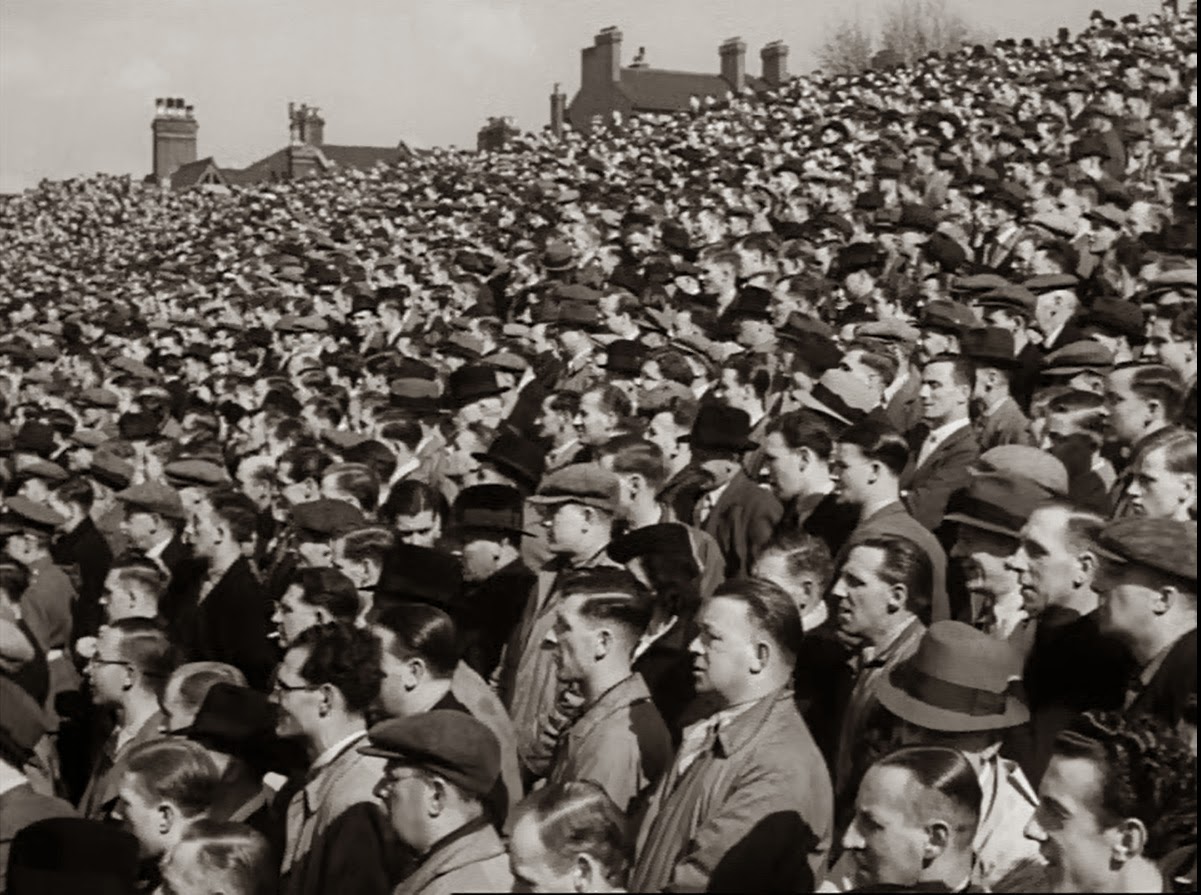
Here's a rather curious little film: The Arsenal Stadium Mystery is a murder mystery comedy, filmed at Highbury Stadium, featuring some of the 1930's biggest English football stars. The football action includes a mixture of close-ups of actors taking on Arsenal players and crowd scenes and action filmed at Highbury during the team's last home match before the outbreak of war in 1939. The opposition was Brentford who kindly agreed to wear the strip of the fictional opposition team rather than their regular red and white stripes.
 
Based on a novel by Leonard Reginald Gribble, it's the story of 'The Trojans', a fictitious amateur football club taking part in an exhibition match against the mighty Arsenal. When the amateur team's star striker John Doyce (played by Anthony Bushell who later appeared in such films as A Night to Remember and The Battle of the River Plate) dies on the pitch, Inspector Slade of Scotland Yard (played by Leslie Banks) is called in to investigate.
Anthony Bushell


In the course of the film suspicion falls on a number of people, including his lover Gwen Lee (played by Greta Gynt)...
Greta Gynt
 
 ... her boyfriend Phillip (played by Brian Worth) ...
Brian Worth
... Gwen's Swedish cousin Inga Larson (nineteen year old Liane Linden) ...
Liane Larson
... the Trojan's team manager Mr Kindilett (Wyndham Goldie) ...
Wyndham Goldie
.... and Doyce's team mates Raille (Esmond Knight) and Setchley (Richard Norris):
Esmond Knight

Richard Norris
The crowd scene's are interesting, as is the action. For those of us used to the less-physical modern game of football, it's interesting to witness a forward shoulder barging the goalkeeper - a move that was accepted by referees as fair play:
Shoulder barge
 
We are also treated to scenes of an Arsenal team talk:
 
 
This scene is interesting to those viewers who can remember the Arsenal teams of the 1990s, as their manager tells them about the opposition:
 
"They don't play your game,
they play an attacking game."
 
Later, when the score is announced over the tannoy, their manager George Allison (who also acted as the film's technical advisor) says:
 
"1 nil: That's just how we like it."
 
 
 Boring, boring Arsenal!
 
Other points of interest - We see the players training with a game that appears to be a cross between football and volleyball:

Also appearing as himself in the film is Edward Victor H. Emmett who was the voice of Gaumont British News who commentates on the match:


E.V.H. Emmett
-------------------------------------------------------------------------------------------------------------------------
 
Trivia: Considering the popularity of football it's a surprise that there aren't more football films. One of the most interesting examples is the 1953 film The Great Game. The later film marked the second cinematic appearance of Brentford FC, who had appeared in The Arsenal Stadium Mystery and whose stadium, Griffin Park, was used in The Great Game.