Monday, 14 April 2014

The Song You Gave Me (1933)
 
 
Bebe Daniels
This is a rather curious little British musical: It's set in Austria, rather than England and it features an international cast (rather than the usual British stars of stage and music hall). Unfortunately, it shares certain other points with many British musicals of the period: the story is rather predictable and the songs aren't exactly memorable.
 
It tells the story of Mitzi (Bebe Daniels) ...
Bebe Daniels
... a popular singing star who is pursued by a trio of caricature potential suitors who are referred to as her 'Three Musketeers':
 
There's the Baron (Frederick Lloyd) ...
Frederick Lloyd
... an aristocrat working in a government ministry who seems to have his nose stuck perpetually inside a champagne glass, or as we see here, the world's largest brandy glass:
Frederick Lloyd & Lester Matthews
 
Then there's Tony (Claude Hulbert), who is a comically effete idiot and is the fool of the bunch:
Claude Hulbert
And finally there's Max (Lester Matthews) who gives business advice to Mitzi. To be honest, with his pencil moustache, he just doesn't look trustworthy:
 
Lester Matthews
 After a struggling composer Karl (Victor Varconi) ...
Victor Varconi
... insults Mitzi by walking out in the middle of her performance in a nighclub, you just know that they are eventually going to fall in love.
Bebe Daniels & Victor Varconi
It's fair enough that they should get together, after all they were both - unlike the rest of the cast - Hollywood stars. Daniels had appeared in countless films as a teenager, had a strong career through the 1920s, starred opposite Harold Lloyd in a number of short films (Lloyd was reputedly in love with her) and was the female lead in 42nd Street. Having made more than 200 films, she settled in London and eventually worked as an interior designer.
Varconi was a Hungarian who moved to Hollywood in the 1920s. His career path as a handsome leading man took a turn, like so many others, with the coming of sound. His heavy accent saw him moving to playing villains, eventually playing Rudolf Hess in a 1944 film. Listening to his accent, it's like Bela Lugosi but with more acting  talent.
 
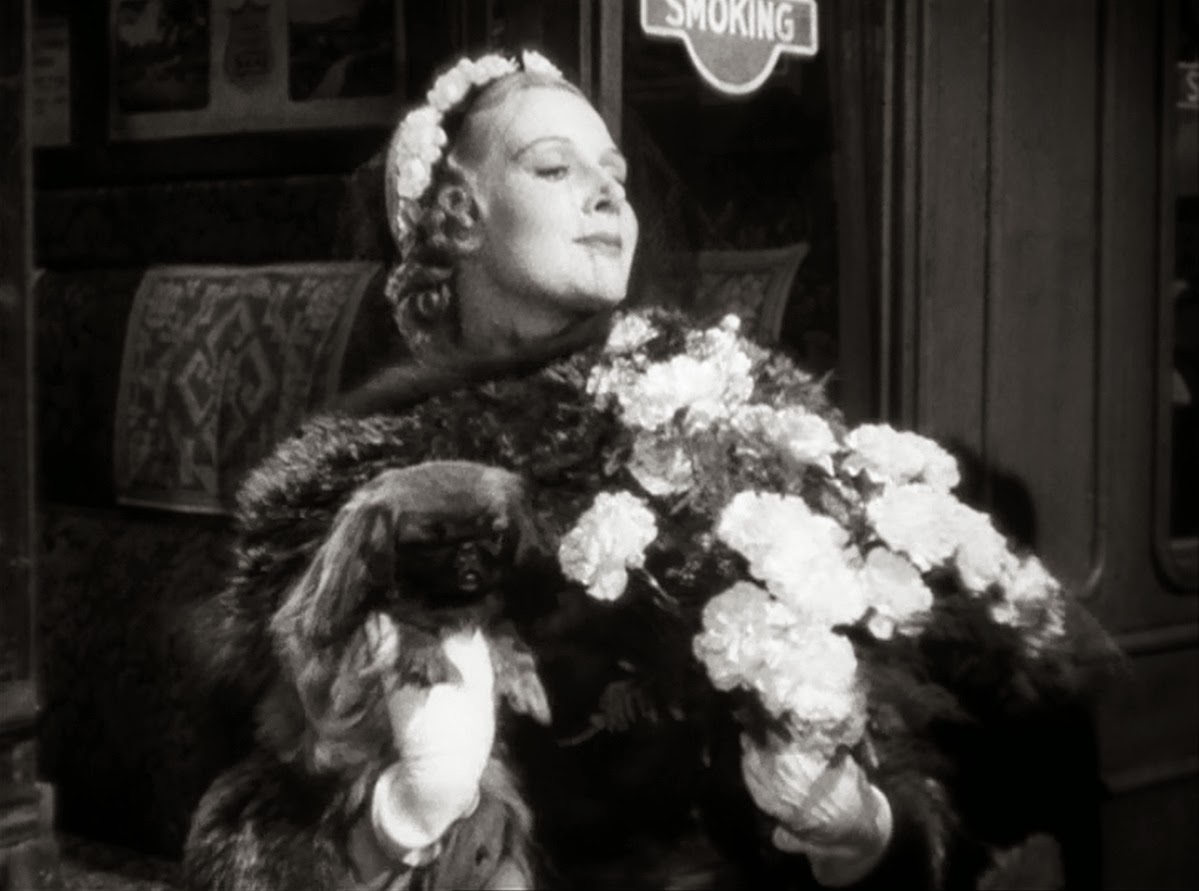
Apart from unmemorable songs, the film has the usual 1930s British cinematic injection of glamour. Rather than seeing Daniels in her underwear, we see her in her home gymnasium showing herself off in a way that wasn't really necessary but no doubt was intended to put 'bums on seats':
Bebe Daniels

Bebe Daniels
 
We also get the obligatory 'let's all laugh at the fairy' scene, when a group of men arrive to be interviewed for the job of Mitzi's secretary:


There's also some saucy innuendo, courtesy of Mitzi's friend Emmy (Iris Ashley):
Iris Ashley
Iris Ashley & Bebe Daniels
 Wondering where Karl goes in the evening, Mitzi asks:
"What can a man possibly do between 9 and 11?"
To which Emmy replies:
"I know a man who can do a lot in 15 minutes."
Prompting the response:
"Is that how you got that necklace?" 
 
It's not really a film for everyone, but it's light hearted and lasts just over an hour, so it's certainly worth watching. And for those who are interested, it marked the first on screen appearance of Stewart Granger in an uncredited role as a waiter at a golf club:
Stewart Granger
And since it's on a DVD with four films for just a tenner, it's worth buying. The set includes Over She Goes which is genuinely worth watching and contains a number of strong songs. So buy it for that and get The Song You Gave Me, Music Hath Charms and Harmony Heaven as a bonus!


Sunday, 6 April 2014


Bank Holiday (1938)


 When we think of the traditional British Bank Holiday what comes to mind?

The rush to escape from work ... 
 
... the crowds at the railway stations ...
 
 
... the even bigger crowds at the seaside ...
 
 
... the drunks spilling out of pubs ...
 
... the inevitable fights ... 
 
 
... and, of course, the rain!


That's right: All the ingredients are here in this odd little film about an unmarried couple planning what used to be known as a 'dirty weekend' at the seaside.

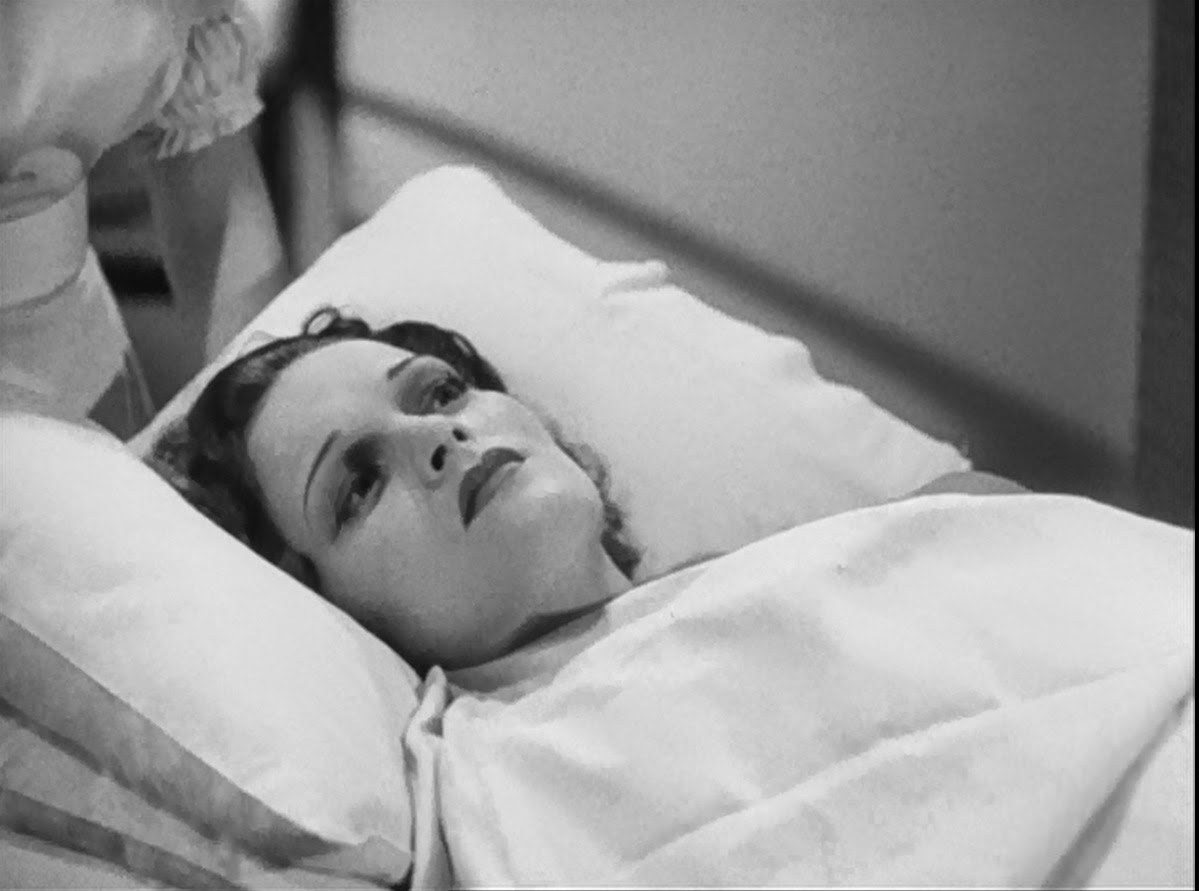
The couple in question are a nurse, Catherine Lawrence (Margaret Lockwood) ...
Margaret Lockwood
... and her boyfriend Geoff (Hugh Williams):
Hugh Williams
Hugh Williams and Margaret Lockwood

The morals of their planned weekend away together (signing into the hotel as Mr and Mrs Smith) are a sign of the times. As Cathy tells a surgeon at the hospital:

"You never know what might happen in the world nowadays. You've got to try and be happy while you can."

Her words reflect a world that was just one year away from war.

However, her world is turned upside down before she leaves for the weekend when a woman dies in childbirth, leaving a grieving husband (John Lodge) to cope all alone over the holiday.

Margaret Lockwood

John Lodge

The film also offers us an opportunity to see Margaret Lockwood in a bathing suit ...
Margaret Lockwood
... and Hugh Williams displaying what appears to be a tattoo on his forearm:
Hugh Williams and Margaret Lockwood
Most of the story revolves around whether Cathy will remain with Geoff at the seaside, and surrender her respectability (or should I say 'virginity', since it's not 1938 anymore?) to Geoff, or will she return to London to be with a man she hardly knows?

Whilst Cathy and Geoff play out this serious story line, the film offers the light relief of Doreen (Rene Ray) and Milly (Merle Tottenham) who have travelled to the seaside where Doreen is set to compete as 'Miss Fulham' in a beauty contest.

Rene Ray and Merle Tottenham
The irony is that 'Miss Fulham' is a working class girl with little experience of the high-life. She orders Benedictine liquor in a hotel bar, expecting a cocktail. After trying a small glass she orders a tumbler full. Anyone whose ever tasted Benedictine knows that the small glass would have been sufficient. Her character shows how much the world has changed: back in 1938 Fulham was a very different area to now. Nowadays, if we think of 'Fulham' we'd expect someone out of 'Made in Chelsea' or a girl suited to be on Hugh Grant's arm, not a sharp-voiced shop girl.

By contrast, Dorothy's rival is 'Miss Mayfair':
Jeanne Stewart
Whilst appearing as the epitome of thirties glamour, audiences familiar with the pages of the News of the World would have immediately understood that Mayfair was an area famed for its prostitution.

If that isn't enough to convince the audience of her nature, we her with a succession of men, each older - and more prosperous - than the last. When she walks over a grating on the pier, Dorothy and Milly look up and are shocked by what they see:

Rene Ray and Merle Tottenham


"She ought to be ashamed of herself!"

The inference is clear, Miss Mayfair isn't wearing any underwear!

During the contest 'Miss Mayfair' steals the limelight from her more low key competitors:

Jeanne Stewart
The judge is certainly impressed ...


... so impressed that he takes her home with him!


This film is one of the curious little gems of British cinema: largely forgotten but fun in the comic sequences and Carol Reed directs the scenes featuring the bereaved husband with a genuine flair in what was his sixth of more than thirty films. The problem lies with the balance between the comic sequences and the more serious scenes. Furthermore, despite the familiarity of the Bank Holiday scenes, the treatment of the bereaved father seems rather dated: his child has survived the death of the mother. Yet, when he announces that he will never see the child, no one bats an eyelid. They simply carry on as if such lack of emotion for a child is normal. And maybe audiences failed to feel sympathy for Cathy in her treatment of Geoff. She leaves her fiancée (a man who is clearly passionate) for a man she hardly knows. Indeed, he seems a rather cold fellow who is grieving for a wife he never even shared a bed with:

As a counter argument, you could say that Cathy is right to leave Geoff to be with a respectable man who, unlike Geoff, doesn't seem to think the world revolves around getting Cathy into bed.

Hugh Williams
The casting of Hugh Williams as Geoff, a man intent on bedding his fiancée, is an inspired one and a role to which he was obviously well suited. It appears he had rather a reputation as a ladies man, with a number of marriages and a long string of lovers, including the legendary actress Tallulah Bankhead. For more on his love life it's worth reading Matthew Sweet's wonderful history of British cinema, Shepperton Babylon.


So who else do we see in Bank Holiday?
Ernest Sefton

Kathleen Harrison

Linden Travers

Michael Rennie (left) in an early uncredited role

Wally Patch

Wilfred Lawson & Garry Marsh

It's currently available on DVD as part of a box set, also featuring: The Wicked Lady, The Lady Vanishes and Love Story. Not bad value for £13!